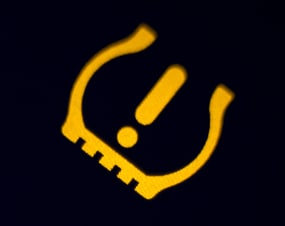
The Jeep dash light with an exclamation point indicates a potential issue with the tire pressure. Check your tire pressure immediately.
A dash light with an exclamation point in a Jeep can be concerning. This light typically signals that one or more of your tires may be underinflated. Maintaining proper tire pressure is crucial for safety and vehicle performance. Low tire pressure can lead to poor fuel efficiency, uneven tire wear, and reduced handling.
Ignoring this warning can result in more serious issues down the road. Always ensure your tires are inflated to the manufacturer’s recommended levels. Regularly checking tire pressure can prevent this warning light from appearing. If the light persists even after adjusting the tire pressure, consult a professional mechanic for further inspection.
Credit: www.mattbowerscdjr.com
Jeep Dash Light Symbols
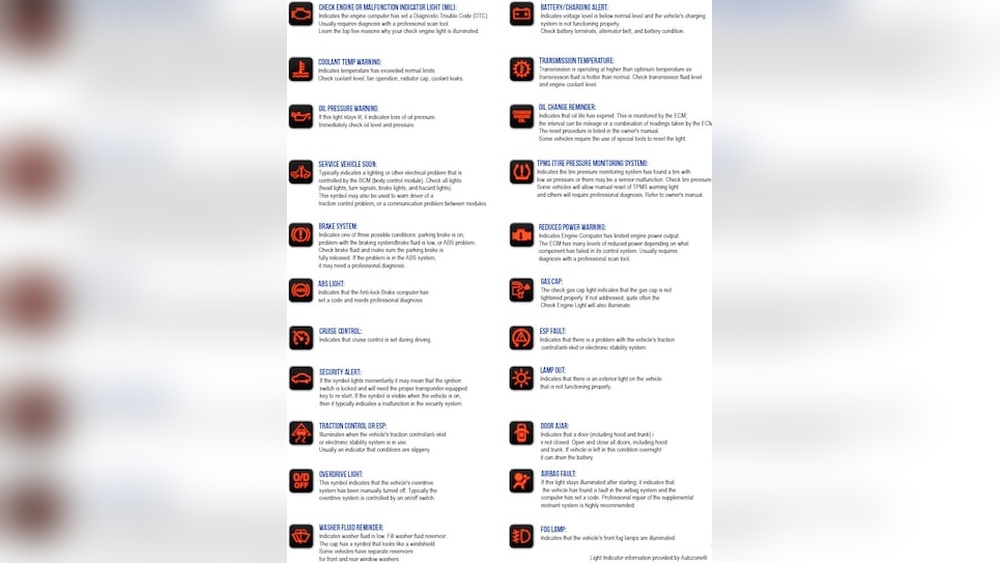
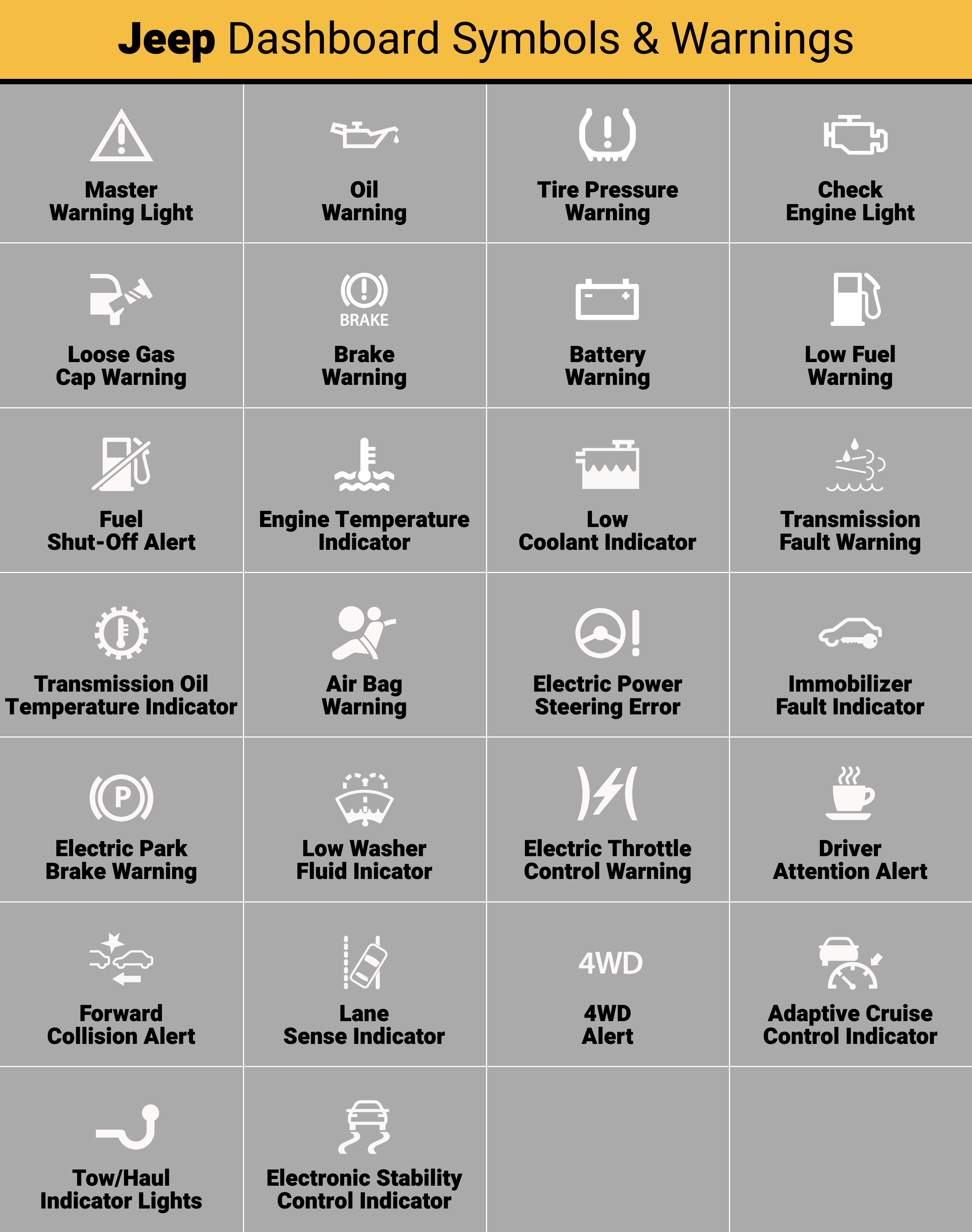
Understanding Jeep dash light symbols is crucial for every driver. These symbols help you know your Jeep’s status and alert you to potential issues. One common symbol is the Jeep Dash Light with an Exclamation Point. Let’s explore what these symbols mean.
Common Symbols
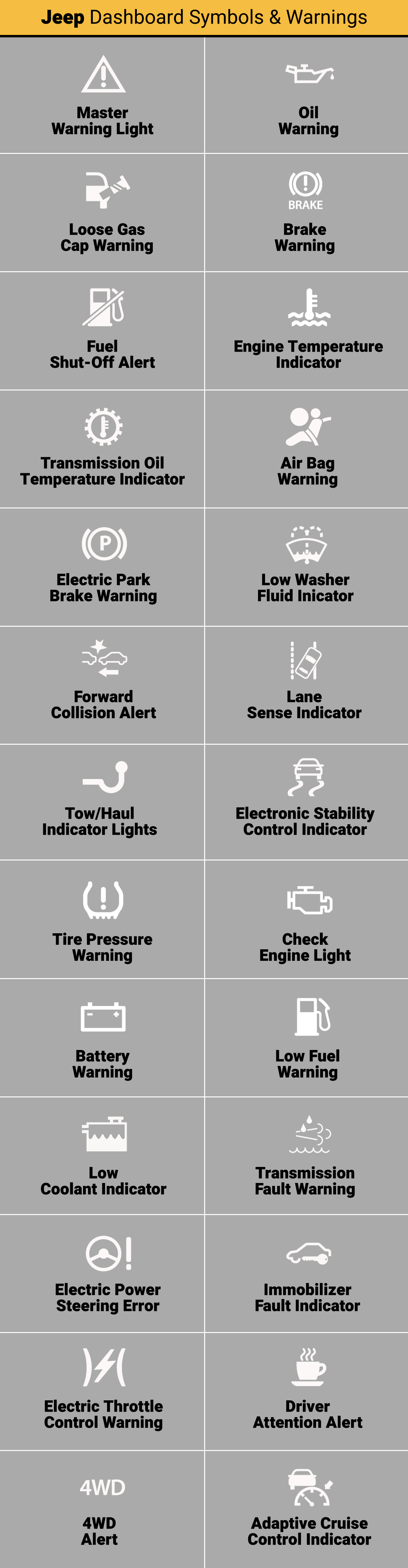
Jeep dashboards display several common symbols. Here are some you should know:
- Check Engine Light – Indicates a potential engine issue.
- Battery Light – Signals a problem with the charging system.
- Oil Pressure Light – Warns of low oil pressure.
- Brake Warning Light – Alerts you to brake system issues.
- Tire Pressure Monitoring System (TPMS) Light – Indicates low tire pressure.
Unique Symbols
Some symbols are unique to Jeep vehicles. Here are a few:
- Jeep Sway Bar Light – Indicates an issue with the sway bar system.
- Jeep 4WD Light – Shows the status of the four-wheel drive system.
- Jeep Hill Descent Control Light – Engages when hill descent control is active.
- Jeep Service 4WD Light – Alerts you to a problem with the 4WD system.
- Jeep Stability Control Light – Indicates stability control is active.
Knowing these symbols can help you maintain your Jeep better. Keep this guide handy for quick reference.
Credit: www.mattblattcdjr.com
Meaning Of The Exclamation Point
Understanding the meaning of the exclamation point on your Jeep’s dashboard is crucial. This symbol can indicate various issues. Knowing what it means can help you take prompt action.
General Significance
The exclamation point on a car’s dashboard is a universal symbol. It usually signals a problem that needs attention. This symbol can represent multiple issues, such as:
- Low tire pressure
- Brake system warning
- Traction control alert
Each warning demands immediate attention. Ignoring these warnings can lead to bigger problems.
Specific Context In Jeeps
In Jeeps, the exclamation point can appear for specific reasons. These include:
| Symbol | Meaning |
|---|---|
| Low Tire Pressure | Check tire pressure immediately. |
| Brake System Warning | Inspect brake fluid levels and brake pads. |
| Traction Control Alert | Look into traction control settings or sensors. |
Jeeps often have advanced systems that can detect issues early. Always refer to your Jeep’s manual for detailed explanations.
Potential Causes
The Jeep dash light with an exclamation point can be alarming. Understanding the causes helps in addressing the issue quickly. Below are potential causes for this warning light:
Tire Pressure Issues
One common cause is tire pressure issues. The light may indicate that one or more tires are under-inflated or over-inflated. It is important to check your tire pressure regularly.
- Use a reliable tire pressure gauge.
- Refer to the Jeep’s manual for the correct tire pressure.
- Adjust the pressure if necessary.
Maintaining proper tire pressure ensures safety and improves fuel efficiency.
Brake System Alerts
The dash light can also signify brake system alerts. Issues in the brake system are critical and require immediate attention.
Potential brake system problems include:
- Low brake fluid levels.
- Worn brake pads.
- Faulty brake sensors.
Check the brake fluid reservoir first. If the fluid is low, fill it to the recommended level. Inspect the brake pads for wear and replace them if needed. Consult a mechanic if the problem persists.
| Brake Issue | Solution |
|---|---|
| Low Brake Fluid | Refill with recommended brake fluid |
| Worn Brake Pads | Replace brake pads |
| Faulty Sensors | Consult a mechanic |
Ignoring brake alerts can lead to dangerous situations. Always address brake issues promptly.
Credit: www.mattbowerscdjr.com
Immediate Actions
When the Jeep dash light with an exclamation point appears, act immediately. This light often signals critical issues. Ignoring it can lead to severe problems.
Check Tire Pressure
The exclamation point light often warns of low tire pressure. Low tire pressure can affect vehicle safety and performance. Follow these steps to check the tire pressure:
- Get a tire pressure gauge.
- Remove the tire valve cap.
- Press the gauge onto the valve stem.
- Read the pressure on the gauge.
- Compare with the recommended pressure in the manual.
Fill the tires to the correct pressure if needed. Proper tire pressure ensures better handling and fuel efficiency.
Inspect Brake Components
The exclamation point light may also indicate brake issues. Inspecting brake components is crucial for safety. Follow these steps:
- Ensure the vehicle is on a flat surface.
- Use a jack to lift the vehicle safely.
- Remove the wheels to access the brakes.
- Check the brake pads for wear.
- Inspect the brake discs for damage.
- Ensure the brake fluid level is adequate.
If you find any issues, replace the worn parts immediately. Functional brakes are vital for vehicle safety.
When To Seek Professional Help
The Jeep dash light with an exclamation point can be confusing. Sometimes, it may signal a minor issue. Other times, it can mean something serious. Knowing when to seek professional help is crucial. Let’s explore the signs that indicate you need expert assistance.
Persistent Warning Light
A persistent warning light on your Jeep’s dashboard is not something to ignore. If the light stays on for more than a day, it’s time for a professional check. This could mean a deeper problem that needs urgent attention.
Ignoring a persistent warning light can lead to more damage. It can also compromise your safety. Professionals have the tools and skills to diagnose the issue accurately.
Unusual Vehicle Behavior
Unusual vehicle behavior is another sign to seek help. This can include strange noises, vibrations, or a rough ride. These symptoms can be linked to the dash light warning.
A table can help illustrate common unusual behaviors and their potential causes:
| Unusual Behavior | Potential Cause |
|---|---|
| Strange noises | Engine issues |
| Vibrations | Suspension problems |
| Rough ride | Tire or alignment issues |
Any of these unusual behaviors paired with the dash light means your Jeep needs a professional. Addressing these issues early can save time and money. It also ensures your Jeep remains safe to drive.
Preventive Maintenance Tips
Keeping your Jeep in top condition is crucial. The dash light A with an exclamation point can signal different issues. Understanding how to prevent these issues can save time and money. Below are some preventive maintenance tips to keep your Jeep running smoothly.
Regular Inspections
Regular inspections help in identifying potential issues early. Check your dash lights periodically. Use the owner’s manual to understand the lights.
| Inspection Frequency | Components |
|---|---|
| Weekly | Fluids, Tire Pressure |
| Monthly | Brakes, Lights, Battery |
| Quarterly | Belts, Hoses, Filters |
Timely Repairs
Addressing issues promptly can prevent bigger problems. Timely repairs are essential for vehicle safety.
- Address Warning Lights: Do not ignore dash lights.
- Check Engine: Look into any engine-related warnings.
- Brake System: Fix brake issues immediately.
- Electrical System: Inspect electrical faults.
Following these maintenance tips will ensure your Jeep stays in good shape. Always be proactive with car care.
Understanding Your Jeep Manual
The Jeep manual is your best friend for car issues. If you see a dash light with an exclamation point, the manual helps. Knowing where to find information in your Jeep manual is key.
Locating Information
The manual often starts with a table of contents. This section helps you find the right chapter quickly. Look for headings that mention dash lights or warning indicators.
Some manuals have an index at the back. The index lists topics alphabetically for easy lookup. Use this to find specific issues like the exclamation point light.
Key Sections To Review
Focus on sections about dashboard symbols. These sections explain what each light means. The exclamation point light usually has a detailed explanation.
Another important section is troubleshooting. This part of the manual offers step-by-step solutions. It may suggest checking tire pressure or other systems.
The maintenance schedule is also crucial. Regular checks can prevent warning lights from appearing. This section tells you when to service your Jeep.
| Section | Purpose |
|---|---|
| Dashboard Symbols | Explains dash lights and symbols |
| Troubleshooting | Provides solutions for common problems |
| Maintenance Schedule | Outlines service intervals |
By understanding these sections, you can address issues quickly. Keep your manual in your Jeep for easy access.
Technology And Diagnostics
The Jeep Dash Light A with Exclamation Point can be daunting. Modern Jeeps use advanced technology to keep drivers informed. This light is part of that system. Understanding it involves technology and diagnostics.
Using Obd-ii Scanners
An OBD-II scanner is a key tool. It connects to your Jeep’s computer. This scanner reads and clears diagnostic codes. It helps you understand what the dash light means.
Here’s how to use an OBD-II scanner:
- Locate the OBD-II port under the dashboard.
- Plug in the scanner.
- Turn on the ignition without starting the engine.
- Follow the scanner’s instructions to read codes.
This tool is essential for any Jeep owner. It saves time and money.
Interpreting Diagnostic Codes
Once you have the codes, the next step is interpreting them. Each code has a specific meaning. They point to issues in various systems.
Here are some common codes:
| Code | Meaning |
|---|---|
| P0300 | Random/Multiple Cylinder Misfire Detected |
| P0442 | Evaporative Emission System Leak Detected (small leak) |
| P0171 | System Too Lean (Bank 1) |
Refer to your Jeep’s manual or an online database. This will help you understand the codes. Fixing these issues can often turn off the dash light.
Frequently Asked Questions
What Does The A With An Exclamation Mark Mean On A Jeep?
The “A” with an exclamation mark on a Jeep indicates a problem with the auto start-stop system. Check your Jeep’s manual for detailed troubleshooting.
What Is The A With A Circle On My Jeep Dash?
The A with a circle on your Jeep dash indicates the Stop/Start system. It shows the system’s status.
What Does The A With A Circle And Exclamation Mark Mean On A Car?
The “A” with a circle and exclamation mark indicates an issue with the car’s Start/Stop system. Check the vehicle’s manual or consult a mechanic for details.
What Does A Yellow A With A Circle Around It Mean?
A yellow A with a circle around it often represents an anarchy symbol. It stands for political and social freedom.
Conclusion
Understanding your Jeep’s dash light with an exclamation point is crucial for vehicle safety. Regular maintenance prevents costly repairs. Stay informed about your vehicle’s warning signals. Addressing issues promptly can save you time and money. Keep your Jeep running smoothly and enjoy a safer driving experience.
Stay proactive and attentive to your dashboard alerts.